
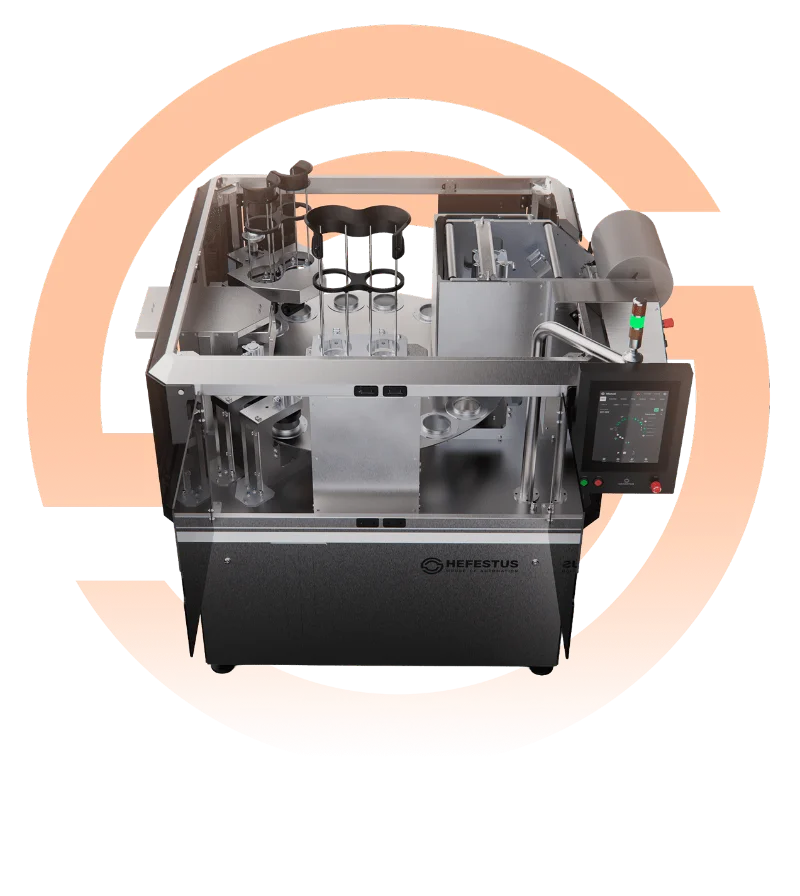
If you are producing hummus at growing volume, the packaging line is usually where scaling stops. Recipes scale easily; filling and sealing does not. This guide covers what actually matters when specifying equipment for hummus – what goes wrong, what to ask a vendor, and how to match a machine to the volume you are running now rather than the volume you hope for.
It is written for people who are going to operate the line, not for market analysts. If you want market sizing and growth figures instead, that is covered separately in our hummus packaging lines market overview.
Start With the Product, Not the Machine
Most specification mistakes come from treating hummus as a generic paste. It is not. Hummus is a thick, semi-viscous product that separates, traps air, and smears – and each of those behaviours puts a specific requirement on the equipment. Before you look at a single machine, write down these four numbers about your own product:
- Viscosity range across your SKUs. A classic hummus and a thinner dressing-style variant may need different fill settings, or a machine that can hold both.
- Particulate content. Whole chickpeas, roasted pepper pieces, or za’atar toppings change the filling mechanism you need.
- Oil layer behaviour. How quickly does the olive oil separate in your product, and does the recipe change through a run?
- Target fill weight and tolerance. The tolerance your retailer or regulator demands is the number that decides how much fill accuracy you have to buy.
A vendor who does not ask for these before quoting is quoting a generic machine.
The Seven Things That Go Wrong
These are the recurring failure modes in hummus packaging. Each one maps to something you should raise explicitly during specification:
| Problem | What to specify against it |
|---|---|
| Thick, viscous paste resists flow | Filling system rated for your actual viscosity range, not a nominal figure |
| Product smears on the container rim | Rim-clean filling approach; ask how the machine prevents smear rather than cleans it up |
| Oil separates mid-run | Agitation or recirculation in the hopper, and fill accuracy held across a full run |
| Air pockets trapped in the fill | Fill method that displaces air; check weight verification catches what the eye cannot |
| Short shelf life, no preservatives | Seal integrity as the primary spec – a marginal seal is a returned pallet |
| Retail wants identical units | Consistent fill height, lid seating and label placement across the whole run |
| Many SKUs, frequent changes | Changeover time and how much of it is tool-free |
The last row is the one most often underestimated. A line that runs beautifully for eight hours on one SKU can still be the bottleneck if you are switching flavours three times a day and each change takes 45 minutes.
Choosing the Format First
The container decides the machine, so settle the format before shortlisting equipment. Cups, tubs and jars account for roughly 70% of hummus packaging, and for good reason – refrigerated dips need to stack, reseal after opening, show the product through a lid, and survive a retail shelf.
Bottles are the fastest-growing format, driven by squeeze-and-go consumption carried over from condiments, but they suit thinner dressing-style variants rather than a classic thick hummus. If you are considering both, be clear whether you are buying one line that must handle both viscosities or two lines with different jobs.
Multi-compartment trays – hummus with pita, crackers or vegetables – are a different machine class again, and worth separating out in your planning rather than assuming one line covers it.
Matching Throughput to Your Actual Volume
Buy for the volume you are running plus realistic headroom, not for the volume in your five-year plan. Over-specifying ties up capital in capacity that sits idle; under-specifying puts you back in the market within a year.
| System | Throughput | Typical fit for hummus |
|---|---|---|
| Cup Fill & Seal | 24-96 cups/min | Single-serve cups and retail tubs – the mainstream hummus format |
| Form Fill & Seal | 100-300 units/min | Higher-volume runs where the pack is formed in line |
| Tray Sealers | 40-180 trays/min | Multi-compartment and snack-pack formats |
Work out your requirement from your own numbers: units per day divided by the hours you are willing to run, plus an allowance for changeovers and cleaning. That figure – not a headline machine speed – is what you are actually buying.
Automatic or Semi-Automatic
Just over half of installed hummus packaging lines are fully automatic, with semi-automatic making up about a third and manual the remainder. That split is less about company size than about where each option stops making sense.
Automatic earns its cost through consistency and labour, not raw speed. Across our installations, automating packaging typically reduces packaging labour by 40-80%, with most manufacturers reaching return on investment in 8 to 14 months. It also makes traceability easier, which matters if you are supplying retailers with audit requirements.
Semi-automatic is the honest answer for a lot of regional and private-label producers. It lifts throughput well above manual without the capital commitment, and it is often the right step for a business that is growing but cannot yet predict next year’s volume.
Manual remains reasonable for genuinely small-batch production, where machinery would sit idle most of the week.
A practical test: if your packaging labour cost is approaching the monthly cost of financing a machine, automation has already made the case on its own.
Compliance and Hygiene
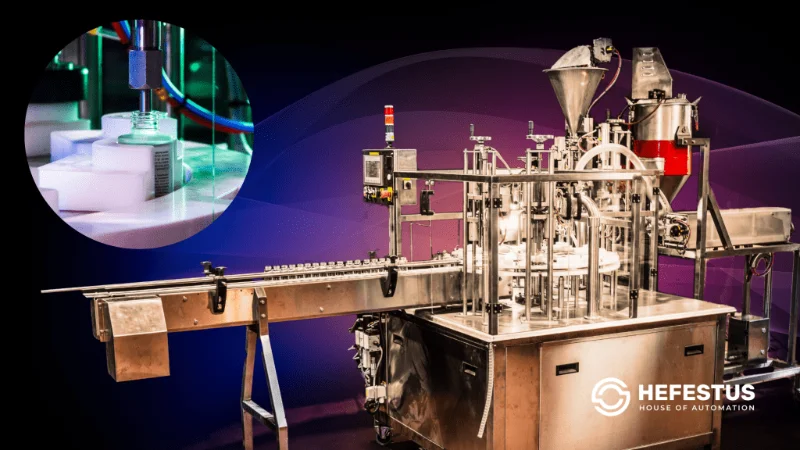
For food contact you want equipment that is FDA and USDA compliant, and ISO 9001 and CE certified. Beyond the certificates, ask how the machine is cleaned: how long a full washdown takes, which parts come off without tools, and whether cleaning between flavour changes is a rinse or a strip-down. On a short-shelf-life product with no preservatives, cleaning time is production time.
Questions Worth Asking Before You Sign
- What fill accuracy do you hold at my viscosity, across a full run, not a demo?
- How long is a flavour changeover, and how much of it needs tools?
- What is the full washdown time, and what comes apart without tools?
- Which parts wear, how often are they replaced, and what do they cost?
- What happens to seal integrity if my fill weight drifts at the top of tolerance?
- Can I see the machine running my product, not a water or gel substitute?
That last one separates vendors quickly. Hummus behaves differently from the test media most factory demonstrations use, and a machine that handles a gel substitute perfectly can still smear rims on the real thing.
The Short Version
Specify against your own product data, not a category average. Settle the container format before shortlisting machines. Size for the volume you are running plus honest headroom. Treat changeover and cleaning time as production capacity, because that is what they are. And insist on seeing the equipment run your actual product before you commit.
Specifying a hummus line?
Tell us your product, volumes and formats, and we’ll talk through the options.
Get in Touch