
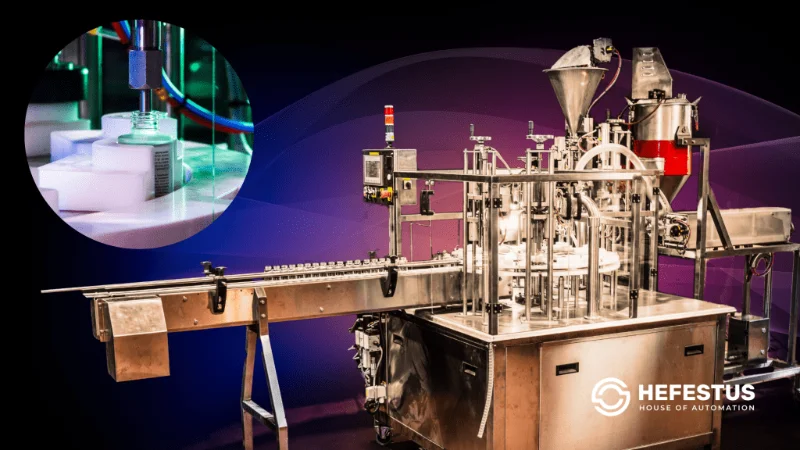
Form Fill & Seal (FFS)
High-speed automatic filling and sealing for form-fill-seal packaging. Perfect for dairy, sauces, and prepared foods.
Models FFS 100 · FFS 200 · FFS 300
Ideal for: Dairy products, yogurt, sauces, condiments, pudding
View specifications & video →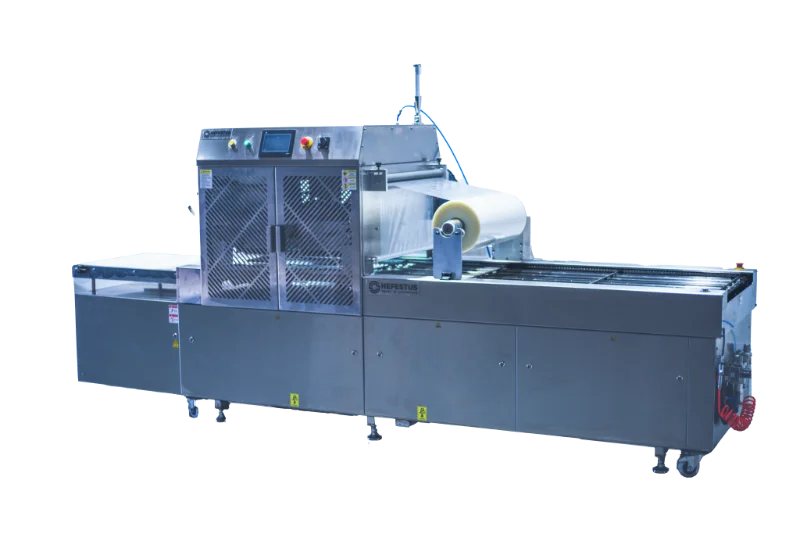
Tray Sealers
Precision tray sealing system optimized for ready-to-eat meals, bakery items, and frozen foods.
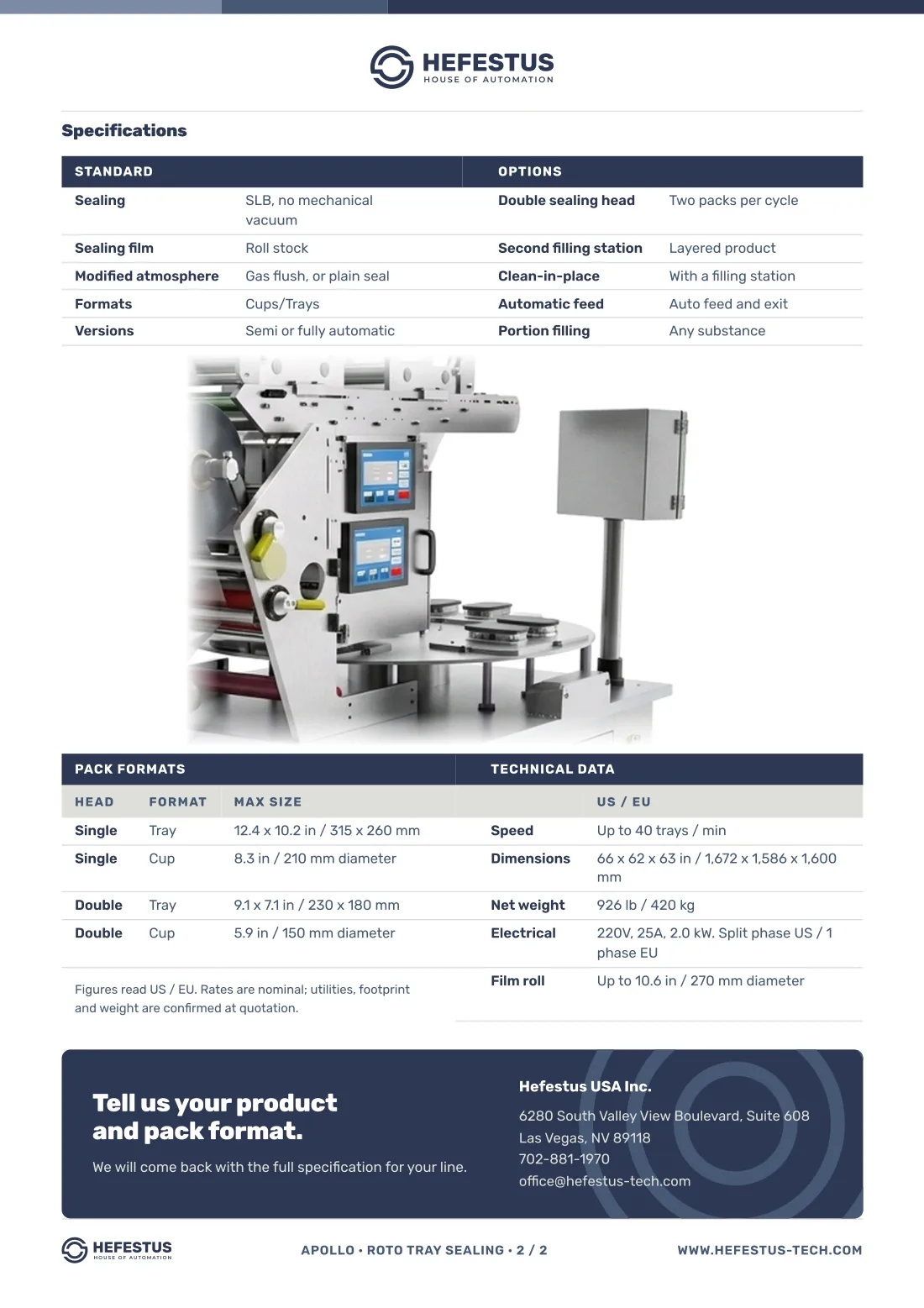
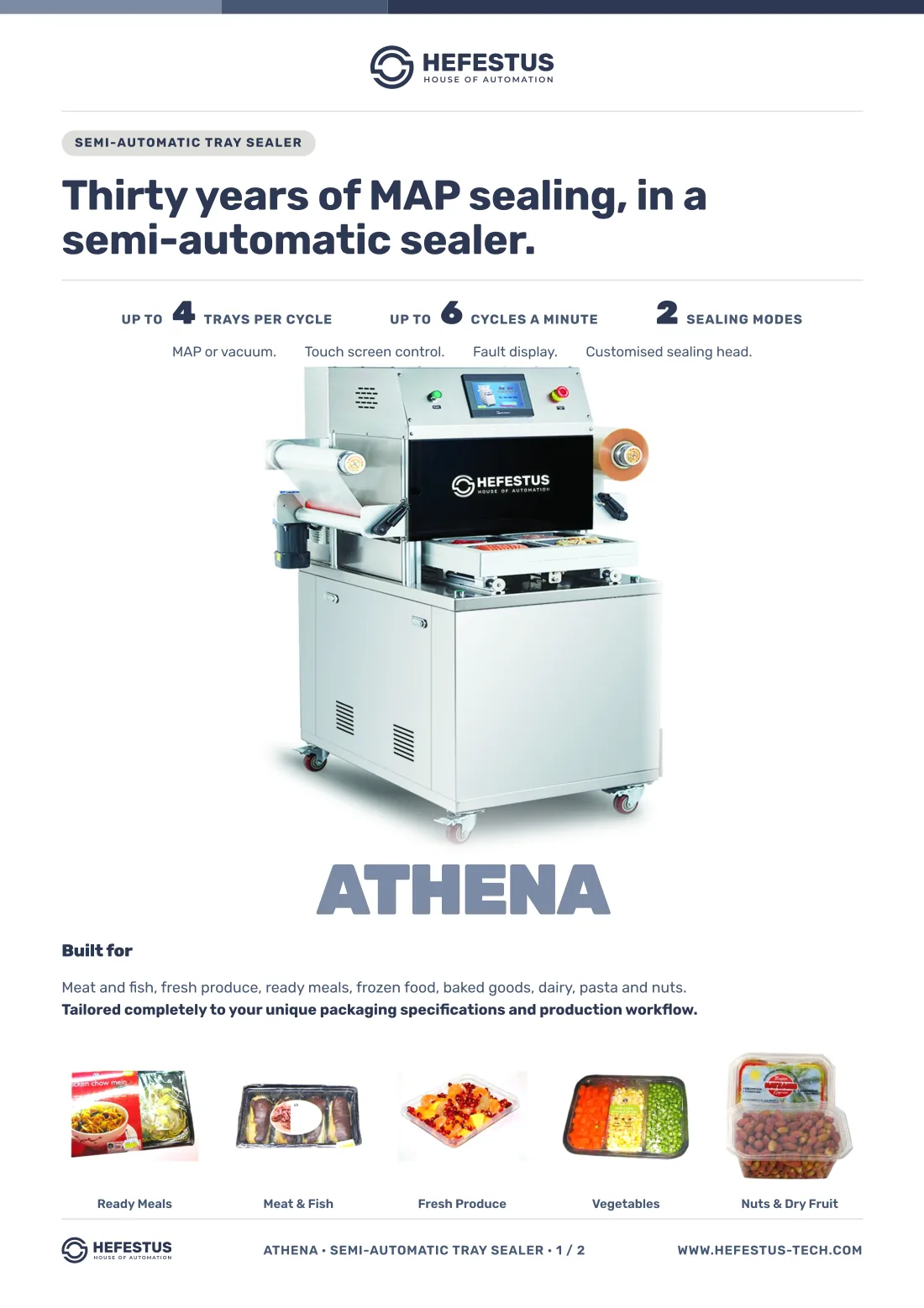
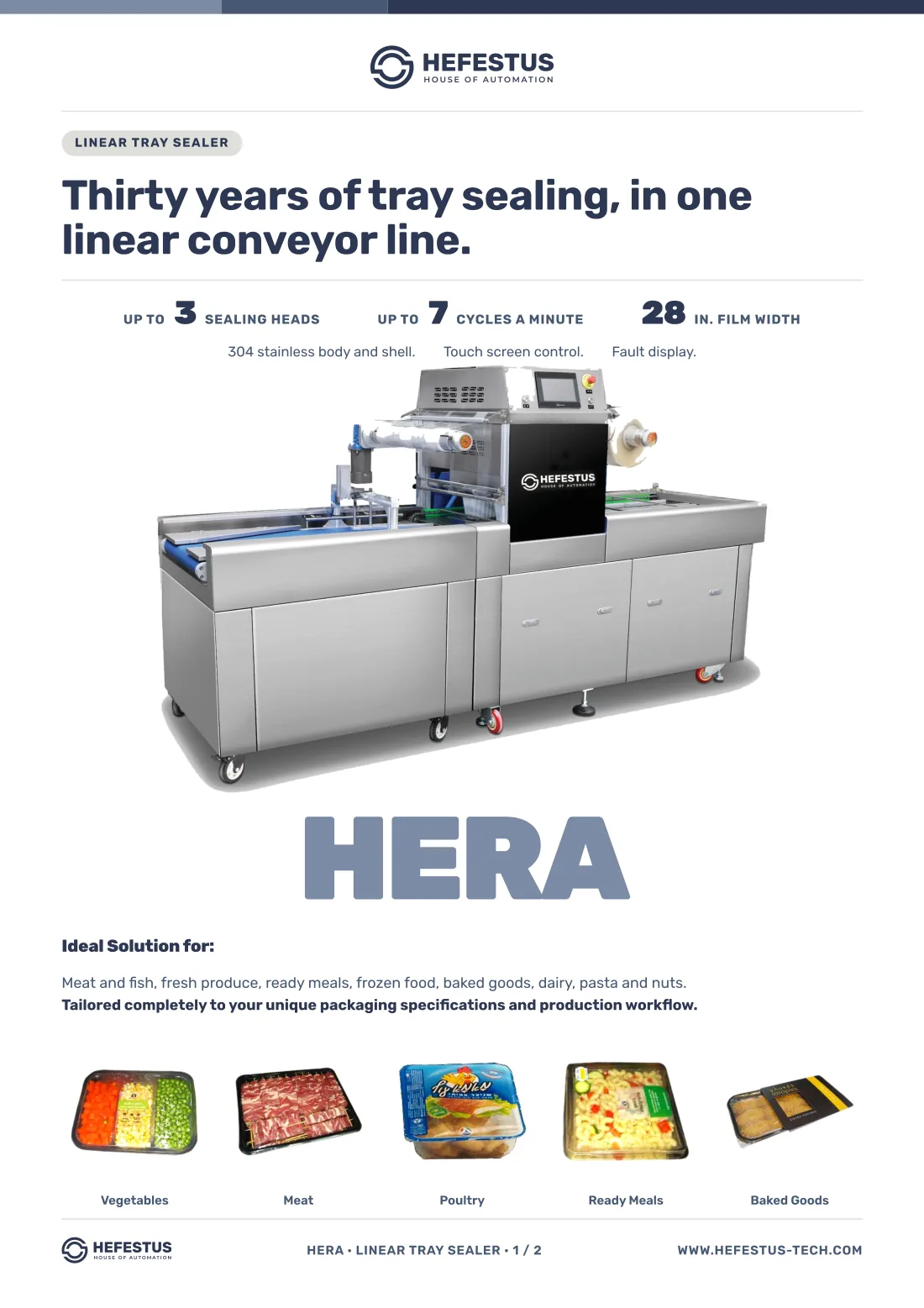
Models Apollo · Athena · Hera
Ideal for: Frozen meals, bakery, deli, fresh prepared foods
View specifications & video →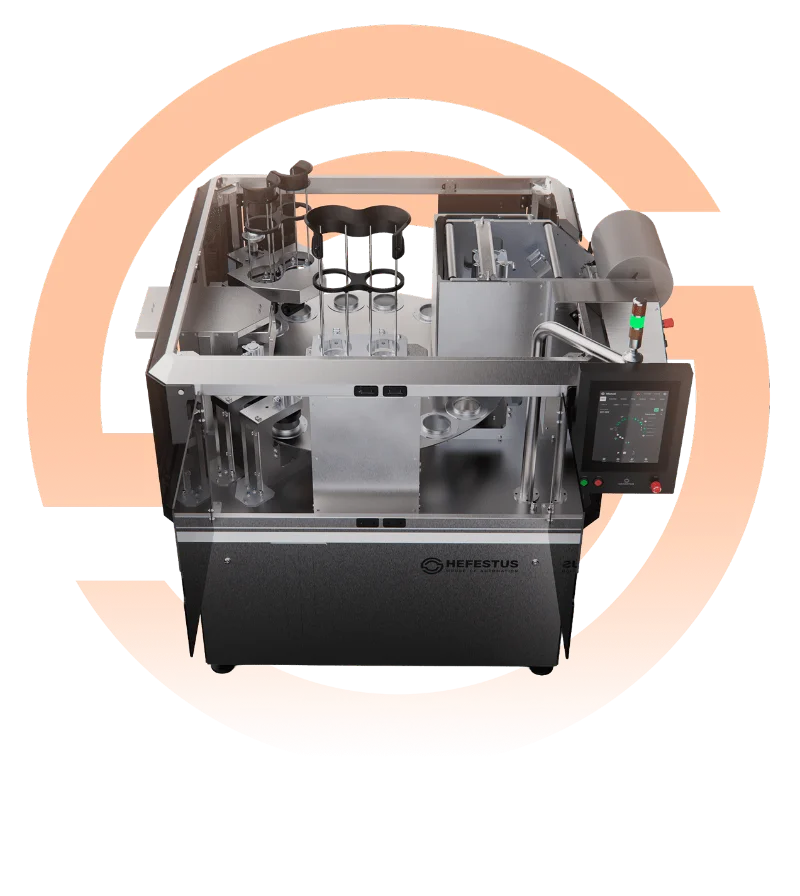
Cup Fill & Seal All machines
Rotary cup filling and sealing system with adjustable fill volumes. Built for dairy, desserts, and specialty beverages.
Models Hermes · Poseidon
Ideal for: Yogurt, pudding, ice cream, coffee creamer
View specifications & video →Which machine class fits your product
The choice is decided by the pack, not by speed. Whether your container arrives already made or is formed on the line rules two of these three out before throughput is worth discussing, so start there.
| If your pack is | The machine class | Published rate |
|---|---|---|
| Pre-formed cups or tubs you buy in | Cup Fill & Seal — Hermes, Poseidon | Up to 120 cups/min |
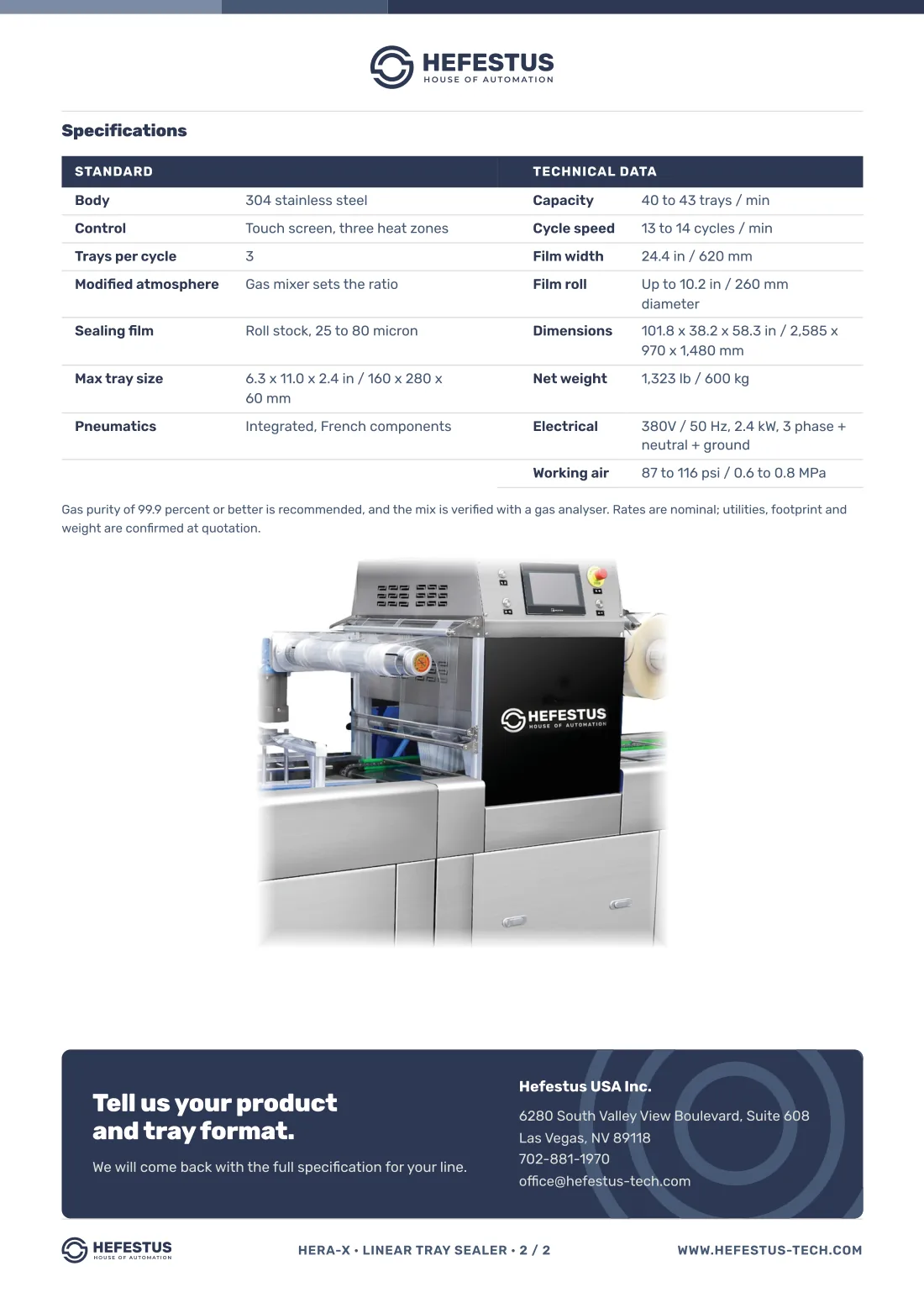
| Pre-formed trays you buy in | Tray Sealing — Apollo, Athena, Hera, Hera-S, Hera-X | Up to 43 trays/min |
| Formed from film on the machine | Form Fill & Seal — FFS 100, 200, 300 | 100–300 units/min |
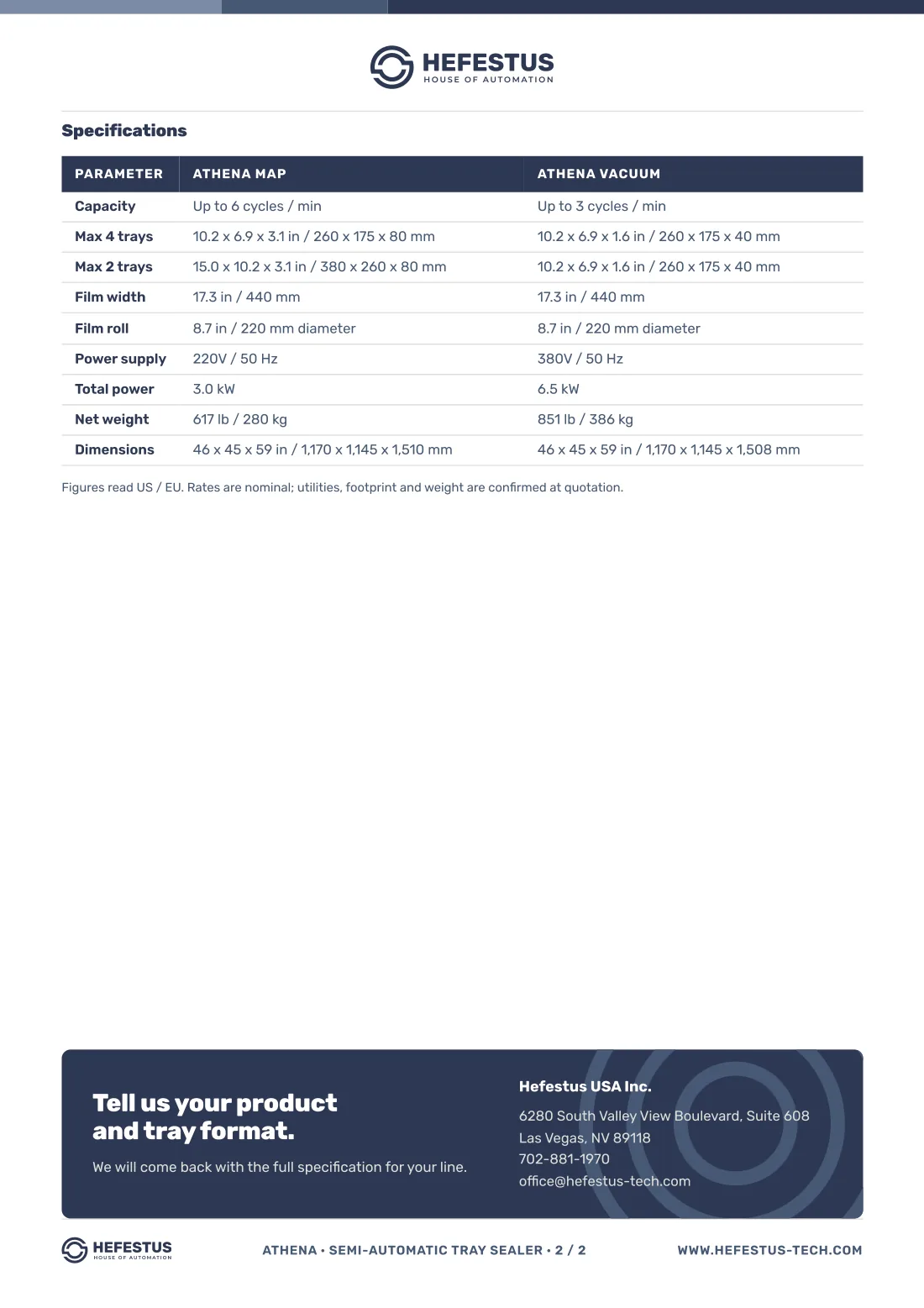
| Trays sealed under vacuum rather than gas | Tray Sealing — Athena Vacuum | Up to 3 cycles/min |
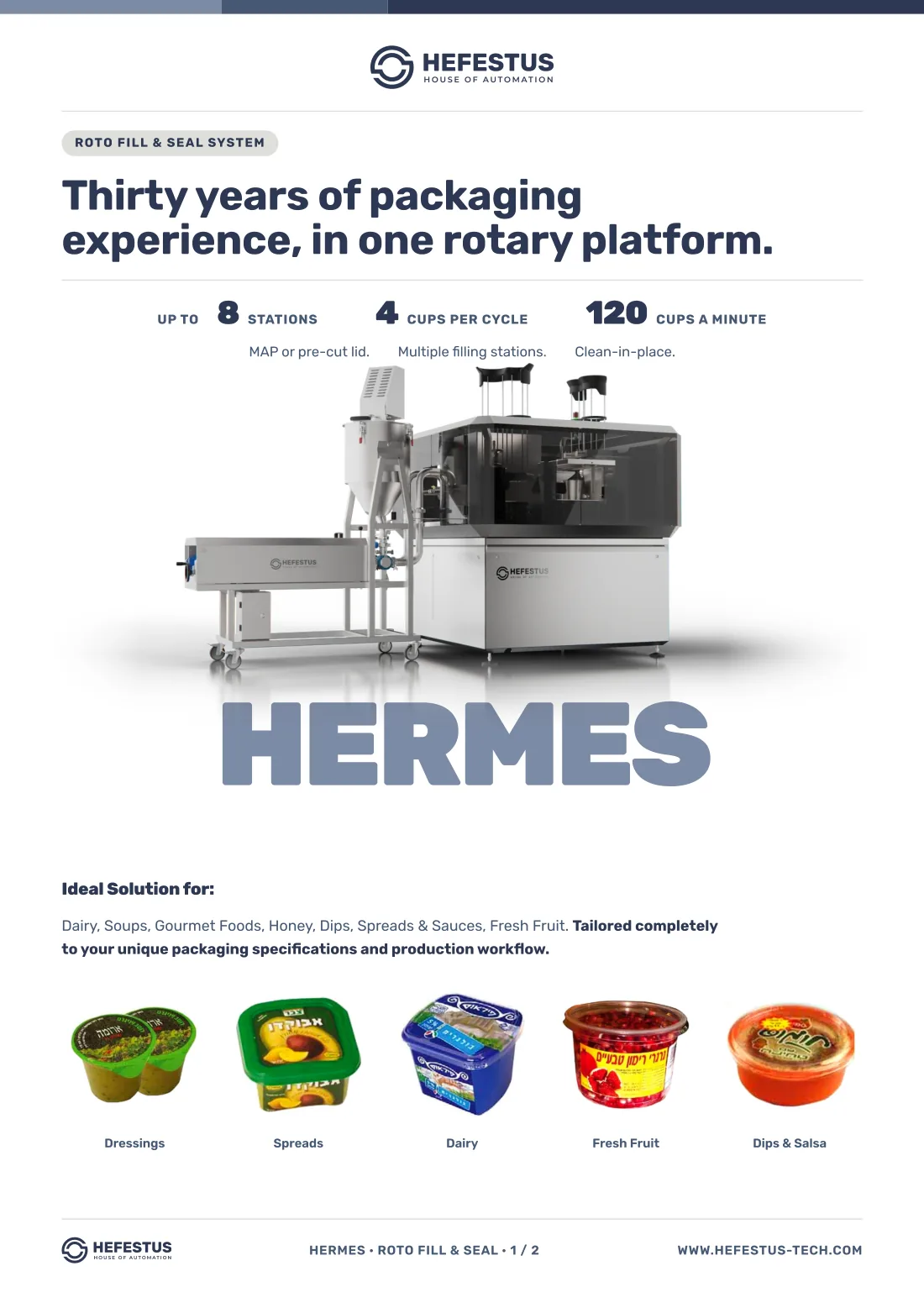
Spec sheets
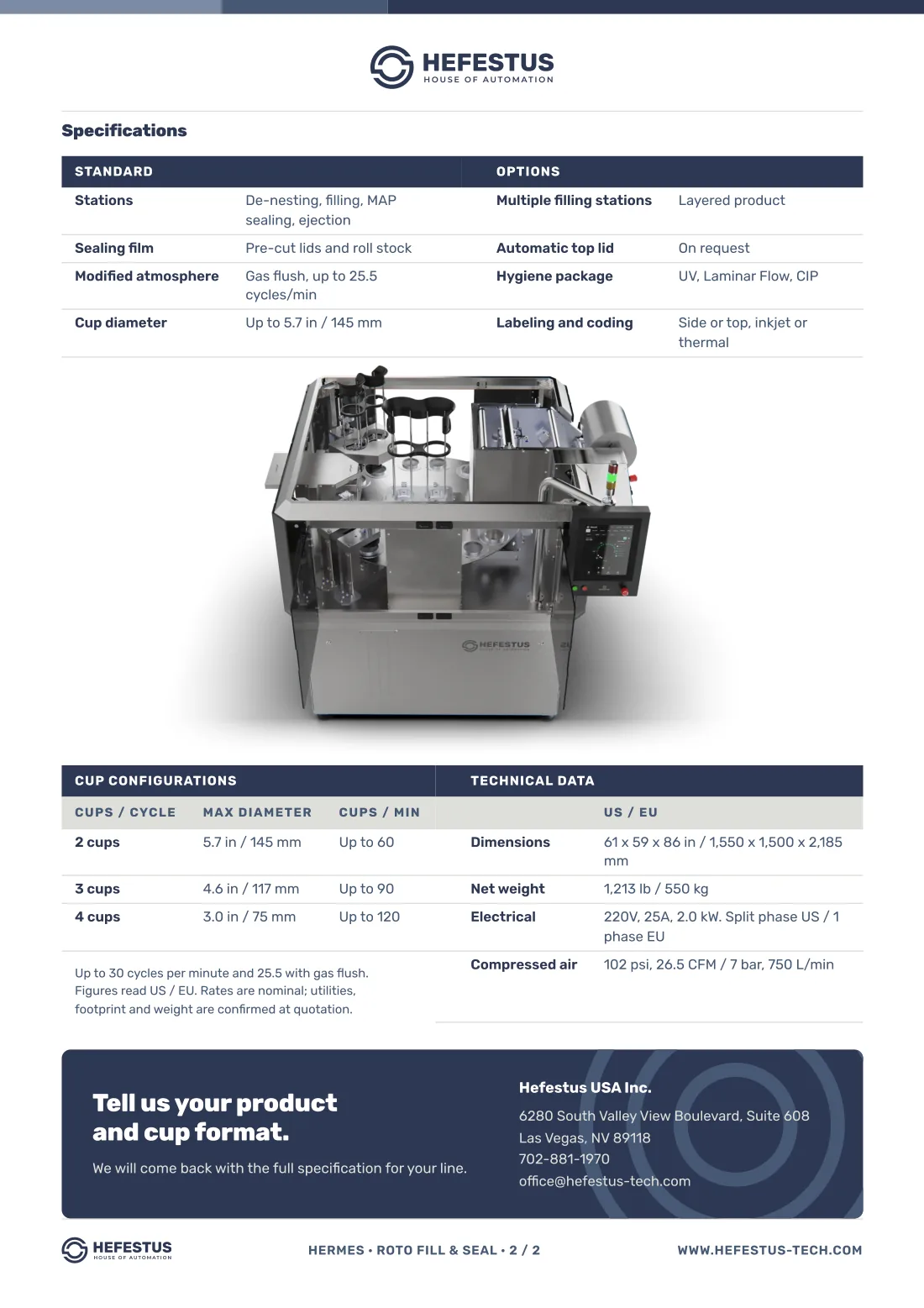
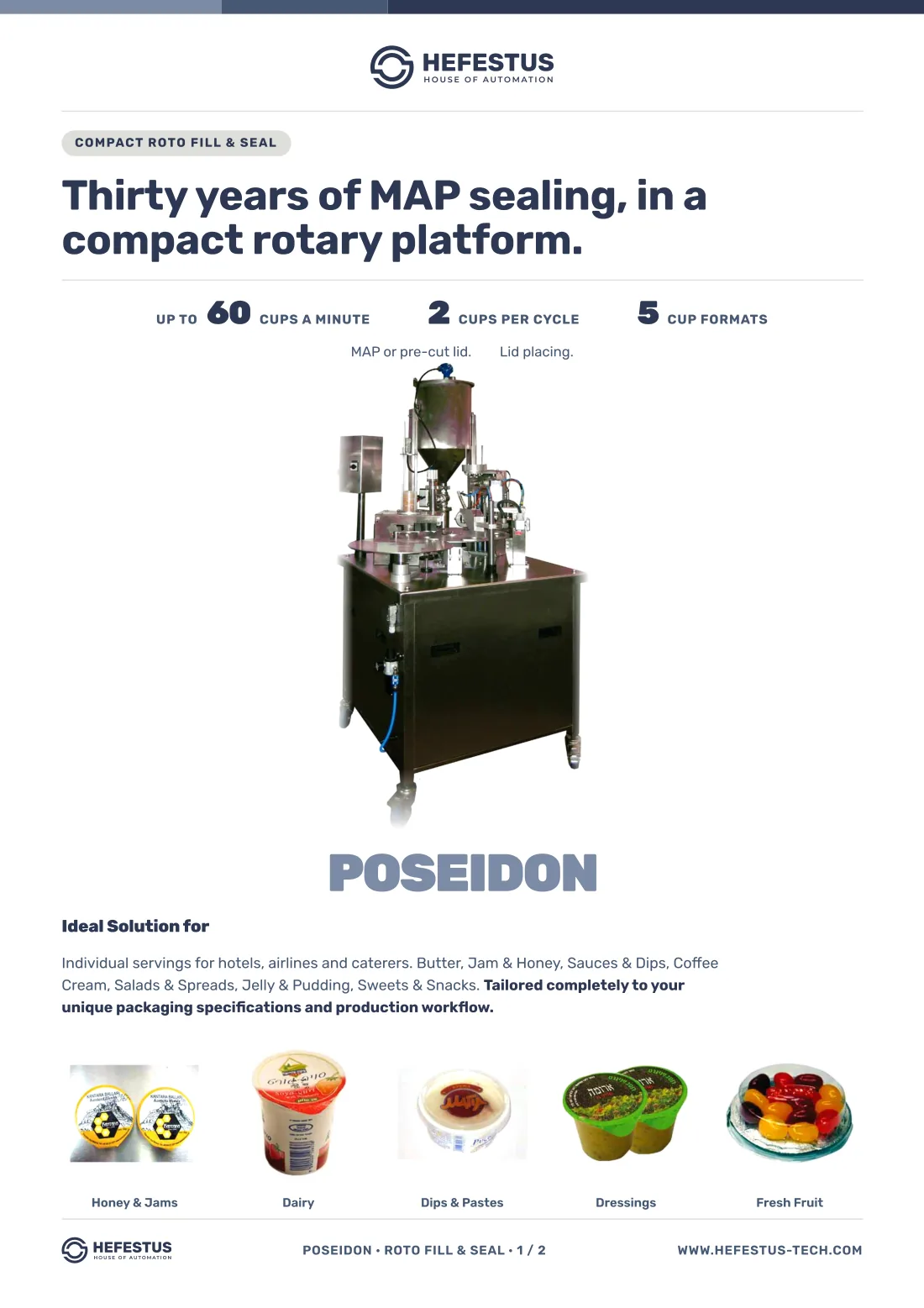
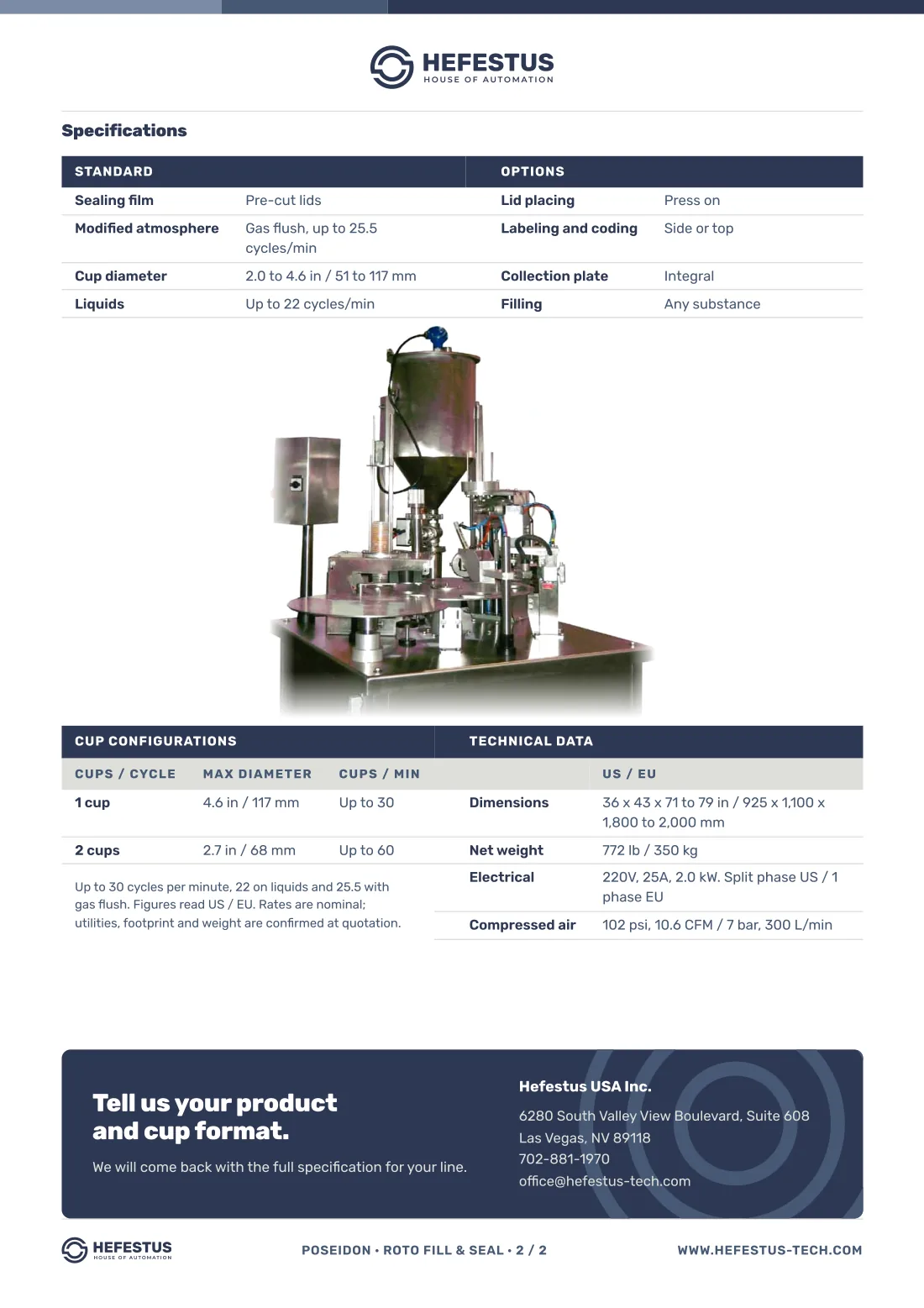
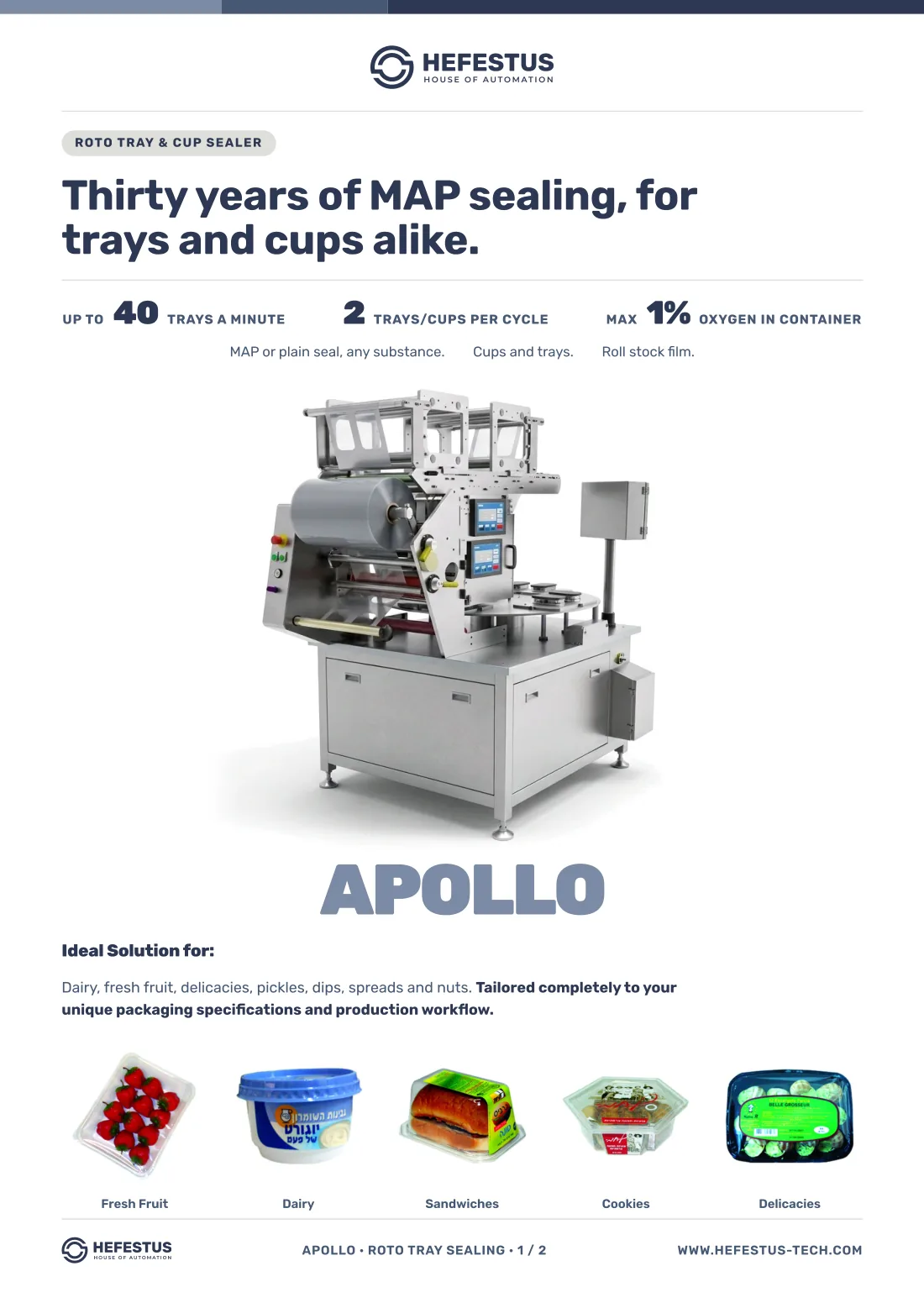
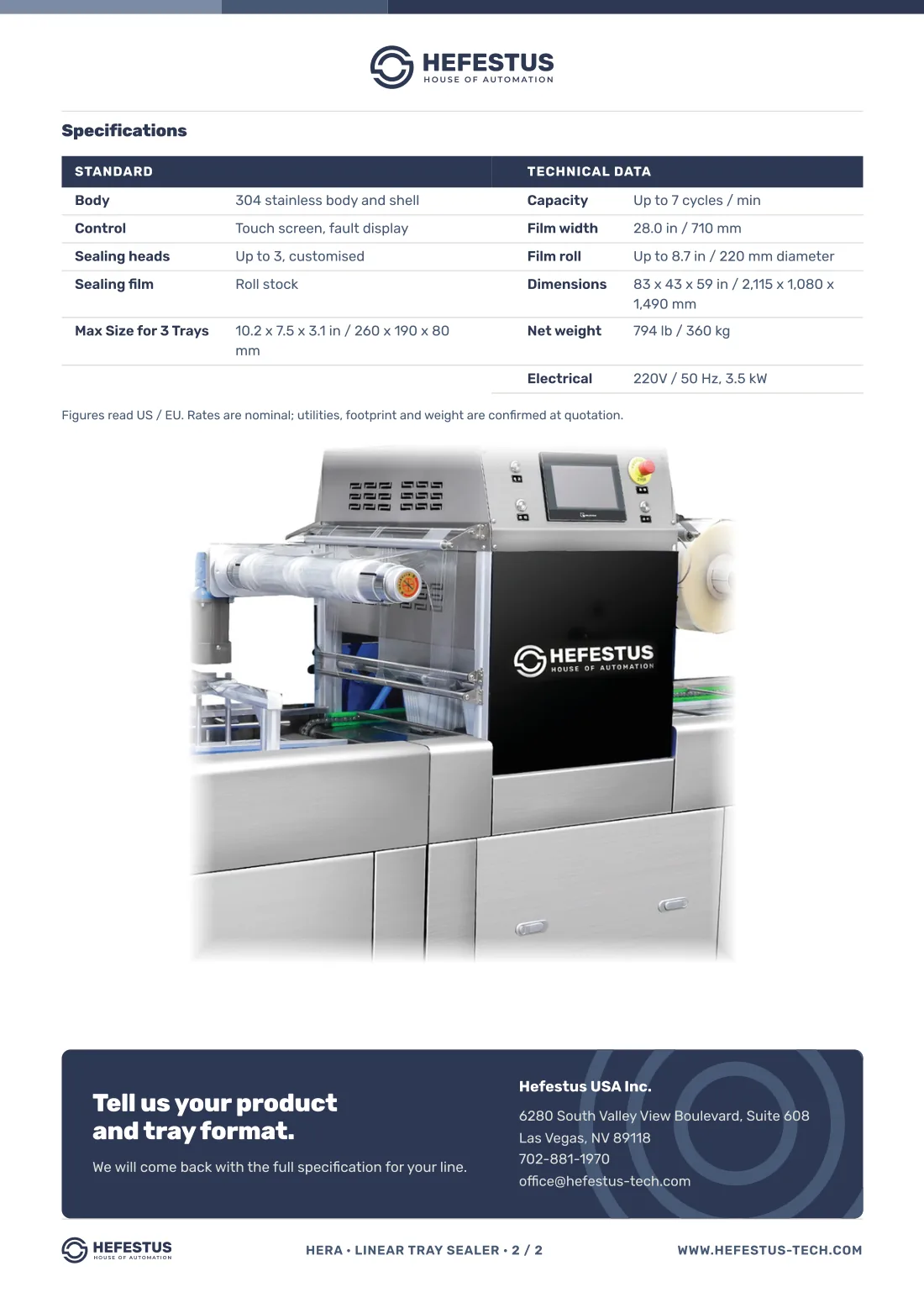
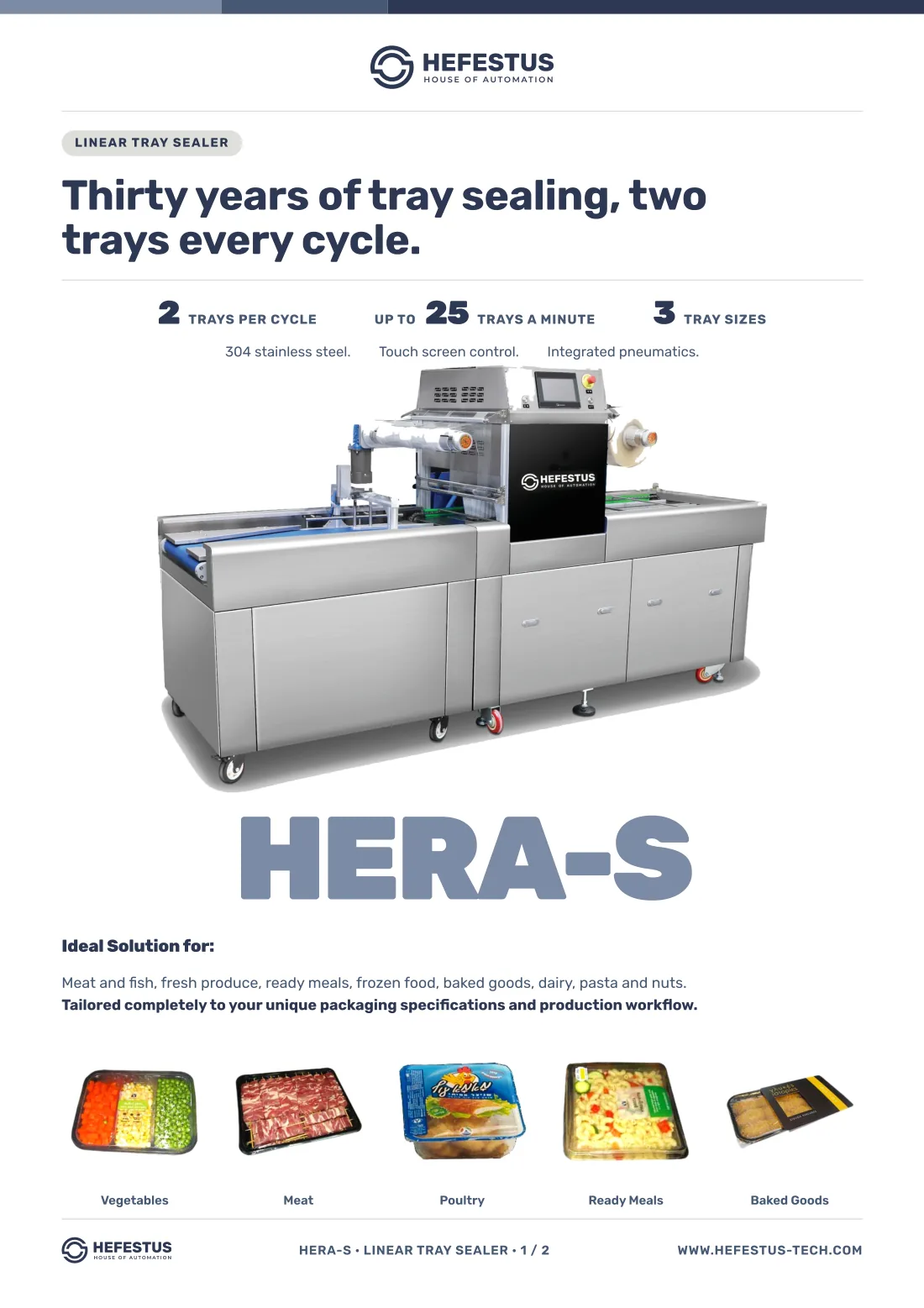
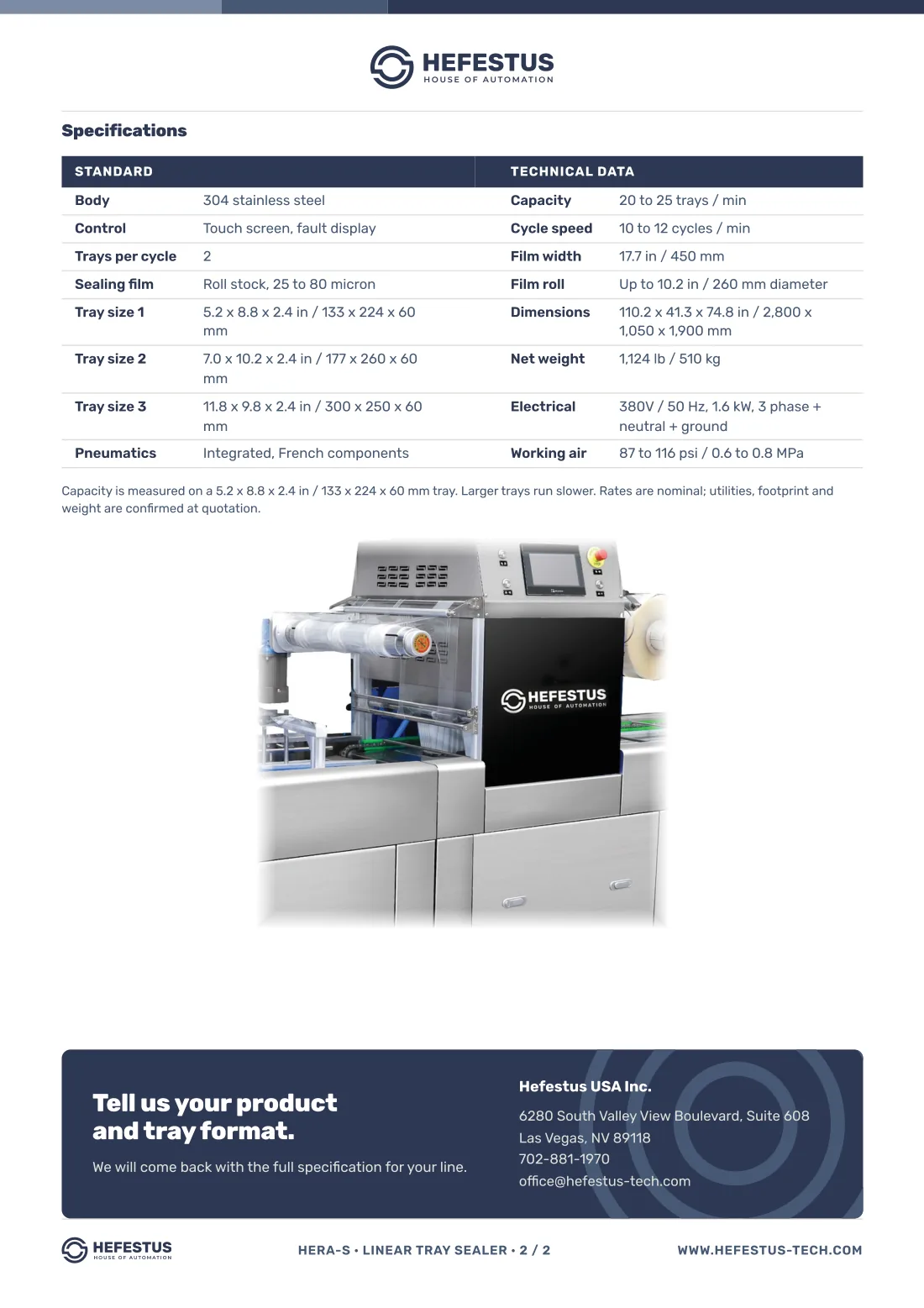
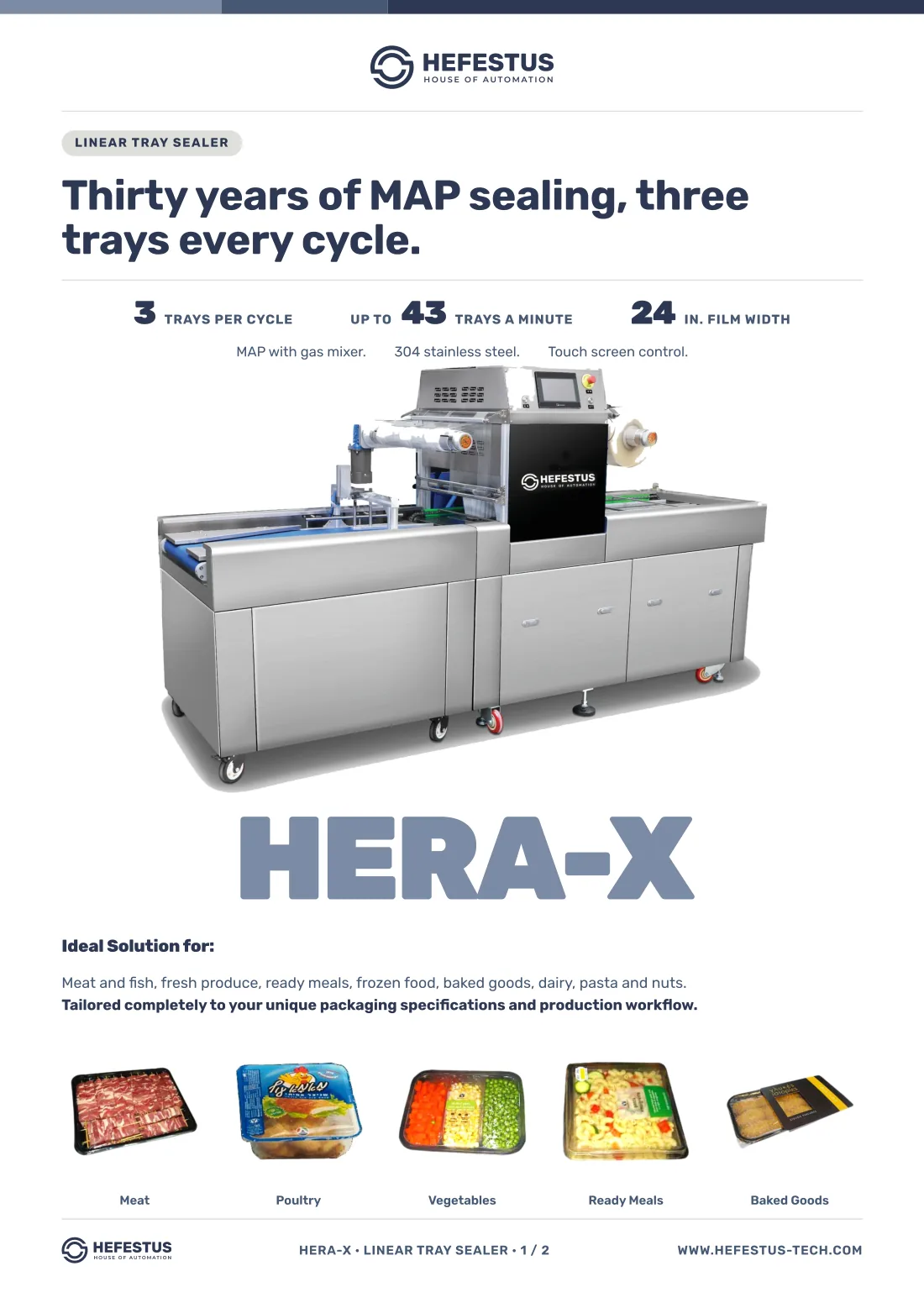
The manufacturer’s own two-page sheets for all five machines. Open one to read it here — tray and cup geometry, film widths, weights, electrical load and compressed air.
Planning the line, not just the machine
Once the class is settled, the questions that decide the specification are about your product: fill weight and viscosity, tray or cup geometry, residual oxygen, changeover time and how many hours a day the line runs. These guides work through those for the products we see most often.
- Specifying an automated tray fill and seal line
- Specifying a yogurt cup filling and sealing line
- Specifying a sauce and dressing packaging line
- Specifying a meat packaging line
- What a packaging machine quote leaves out
Rates in that table are the published ceiling for each class, measured on the easiest pack a machine runs. Yours will differ, which is why every model page lists the tray or cup envelope alongside the speed.
The order these decisions actually happen in
Buyers often arrive having chosen a machine and worked backwards. It goes better in this order:
- Pack format first. This is usually settled by what your retailer will accept and what the pack costs per unit — both decided long before anyone looks at machinery, and both harder to change afterwards than the machine is.
- Then the output you genuinely need. Divide your target by the hours the line actually runs, not the hours the shift is rostered. Changeover, cleaning and breaks are capacity. A line sized on eight running hours misses its target on day one.
- Then atmosphere. Seal only, gas flush, or vacuum skin. This changes the machine, and gas flush costs cycle time that a seal-only rate does not show.
- Then how the product behaves. Viscosity, inclusions, temperature and separation affect the filler far more than the sealer, and they are the usual reason a line never reaches its rated speed.
- Machine last. By this point there is normally only one sensible class, and often only one model.
When automating is worth doing at all
The signals that usually mean yes: you are adding shifts or people to keep up rather than adding output; you are rejecting or reworking packs for seal defects often enough that someone has stopped counting; changeover is eating hours you cannot recover; or you cannot recruit for the roles at all, which in chilled and frozen halls is now structural rather than seasonal.
The signals that usually mean not yet: one short-run product with volume that has not settled; a pack format still being argued about with a retailer; or demand so seasonal that the line would sit idle for most of the year. In those cases a semi-automatic machine, or automating one step rather than the line, is usually the better answer — and we would rather say so than sell you equipment you outgrow in one direction or the other.
What we publish, and what we do not
Every model above carries its dimensions, weight, electrical load where we have it, film envelope and pack geometry on its own page. Those are the figures that decide whether a machine can be installed at all — whether it fits the room, gets through the door, and runs on the supply you have — and they are usually the last things a buyer is given rather than the first.
Where a figure is not published, the gap is stated rather than filled: we do not publish electrical load for the FFS range. If you want a shortcut through all of this, the machine selector asks four questions and returns the published specification for whichever class fits, including when the honest answer is that none of ours does.
Why Hefestus?
✓ Nothing Held Back
Dimensions, weight, electrical load, film envelope and pack geometry are on these pages, not behind a quotation request.
✓ Worked On Your Numbers
Send your operator count, target output and changeover time and we will work the case through with you, using your figures rather than ours.
✓ Built Since 1993
Seven named models across three machine families, designed and built by Hefestus Technologies, with a US office in Las Vegas.
✓ Answers Before the Order
Send your pack, target rate and shift pattern and you get a written line specification back — including when the answer is that we are the wrong supplier.
✓ Told Where We Stop
Each machine class has a published ceiling. Above 96 cups a minute, or 300 units, you have outgrown that class and we will say so rather than stretch it.
✓ Food Formats Only
Cups, trays and thermoformed packs for chilled, frozen and ambient food — not a general machinery catalogue with a food page bolted on.
Not sure which one fits?
Answer four questions and get the published specification for the class that suits your pack — including when none of ours does.
Find your machine