
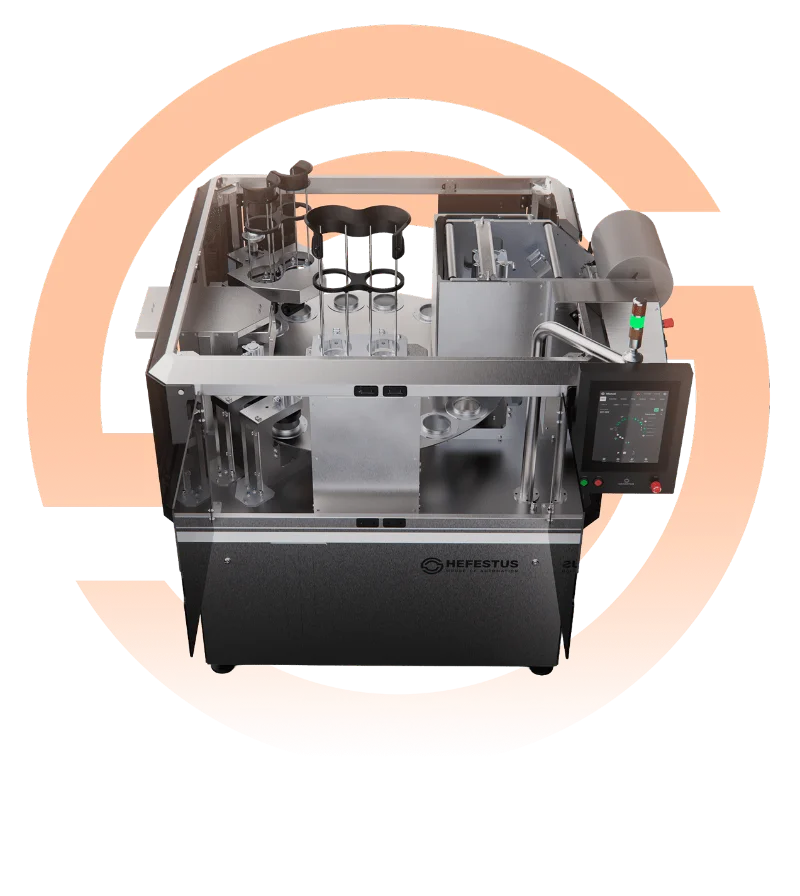
Yogurt looks like a straightforward cup-filling job until you specify a line for it. Between set, Greek, drinkable and plant-based variants, most producers are not running one product – they are running four products with different densities through the same equipment, several times a week. This guide covers what to establish before you shortlist machines.
It is written for people specifying and running the line. If you are after category sizing and growth figures instead, those live separately in our market coverage.
Your Product Mix Decides the Machine
The single most useful thing you can do before talking to a vendor is write down every variant you will run in the next two years, with its density and whether it carries inclusions. Yogurt types behave differently enough that the mix, not the volume, usually drives the specification:
| Yogurt type | Typical format | What it demands of the line |
|---|---|---|
| Set yogurt | Cups, tubs | Accurate filling and a reliable foil seal |
| Greek yogurt | Reinforced cups and tubs | Heavier, denser fills without compromising seal quality |
| Drinkable yogurt | Bottles, pouches | Filling, capping and leak control – not cup infrastructure |
| Plant-based | Cups, pouches, paperboard | Allergen separation and clear labelling |
| Foodservice | Tubs, bag-in-box | Bulk filling and traceability |
The trap is buying a cup line and then deciding to launch a drinkable variant. Bottles and pouches are a different filling and closing problem, not a changeover part. If drinkable is anywhere on the roadmap, say so during specification rather than after.
Inclusions Are the Hardest Part
Fruit-on-the-bottom layers, granola mix-ins and fruit pieces are where standard filling nozzles fail – the same difficulty that shapes frozen dessert lines running ripples and cookie pieces. Inclusions compromise dosing accuracy and clog nozzles sized for smooth product. If any of your SKUs carry them, this is the first thing to raise with a vendor, and the thing to insist on seeing demonstrated.
Establish three numbers: the largest particle size you will run, the proportion of inclusion to base product, and whether the inclusion is dosed as a separate layer or pre-mixed. Those decide whether you need a second dosing station, a larger nozzle geometry, or a different filling principle entirely.
A machine that dose-checks smooth yogurt to a tight tolerance may not hold that tolerance once you add fruit. Ask for the accuracy figure with inclusions running, not the headline number.
Foil Seal Integrity Is the Quality Spec That Matters
Weak foil closures are a persistent quality problem in yogurt, and the consequences land downstream: leaks, spoilage and retailer rejections. On a chilled product with a short shelf life, the seal is not a finishing step – it is the thing keeping the product saleable.
Specify against it directly. Ask what seal integrity the machine holds at your fill weight and cup material, what happens when fill weight drifts to the top of tolerance, and how the line detects a bad seal rather than discovering it at the retailer. Heat-induction foil sealing and lid placement both need to hold precision at speed, not just at demonstration pace.
Cold-chain condensation is worth raising in the same conversation. Moisture and temperature swings affect label adhesion and packaging integrity, and a line specified in a dry test room can behave differently in a chilled production hall.
Allergen and Flavour Changeovers
This is where yogurt lines quietly lose capacity. Switching between dairy and plant-based, or between allergen and non-allergen SKUs, requires deep cleaning cycles – and those cycles come straight out of production time. A line running twelve flavours is a very different proposition from one running three.
When you compare machines, compare changeover as capacity rather than convenience:
- How long is a flavour change, and how much of it is tool-free?
- How long is a full allergen changeover between dairy and plant-based?
- What comes apart for cleaning without tools, and what needs a technician?
- Can changeover parts be pre-kitted so the line is down for minutes rather than an hour?
Multiply the honest changeover time by the number of changes per week. That number belongs in your throughput calculation, and it is often the difference between two machines that look identical on a spec sheet.
Sizing the Line
Headline machine speed is the least useful number on a spec sheet. What you actually need is your daily unit target divided by the shift hours you will genuinely run, with changeover and washdown subtracted before you compare anything.
| System | Throughput | Where it fits for yogurt |
|---|---|---|
| Cup Fill & Seal | 30–120 cups/min | Single-serve cups and retail tubs – the core yogurt format |
| Form Fill & Seal | 100-300 units/min | Higher-volume runs where the pack is formed in line |
| Tray Sealers | Depends on tray size & format | Multipack and snack-format presentations |
Buy for what you run now with realistic headroom. Over-specified capacity sits idle; under-specified capacity puts you back in the market inside a year. If multipacks are part of the plan, note that single-serve multipack formats are more packaging-intensive per unit of product than selling items individually, and that load lands at end of line.
Hygiene and Compliance
Dairy carries strict sanitation requirements that shape line design and changeover procedure, not just paperwork. Look for FDA and USDA compliant, ISO 9001 and CE certified equipment, then go past the certificates: how long is a full washdown, which parts come off without tools, and is cleaning between flavours a rinse or a strip-down?
On a short-shelf-life chilled product, cleaning time is production time. Treat it as a specification, not an operational detail to be sorted out later.
Where Automation Pays
The return is worth building from your own line rather than a published average — operators, giveaway per cup, and rework. On yogurt specifically, those gains concentrate in four places rather than spreading evenly across the line:
- Primary handling – dosing, filling and initial closure on one synchronised platform across cups, tubs, bottles and pouches.
- Sealing – heat-induction foil sealing, lid placement and capping, immediately after fill to limit oxidation.
- Inline quality – checkweighing to catch overfills, plus labelling and date or lot coding on the container.
- End of line – multipack grouping, case packing and palletising, which is where multipack growth creates load.
The consistency argument usually matters more than the labour one. Retail expects identical fill heights, lid seating and label placement across a whole run, and manual lines drift over a shift in ways automated ones do not.
What to Put to a Vendor
- What fill accuracy do you hold with my inclusions running, over a full run?
- What seal integrity do you hold at the top of my fill tolerance?
- How long is a dairy to plant-based changeover, start to restart?
- Talk me through a full washdown – how long, and who has to do it?
- How does the line detect a bad seal before the pallet ships?
- Can I see it run my product, at my temperature, not a substitute at room temperature?
The last one matters more for yogurt than for most products. Chilled behaviour, condensation and inclusion handling are exactly the variables a room-temperature demonstration with test media will not show you.
If You Take Three Things From This
Specify from your product mix rather than your volume. Raise inclusions first, because they break more specifications than anything else. Treat foil seal integrity as the primary quality spec, not a finishing detail. Count changeover and washdown as production capacity, because that is what they consume. And see the equipment run your actual product, chilled, before you commit.